This article covers all the aspects of arranging a Jewish Funeral Service.
- Understanding the ritual of a Jewish funeral
- How is the body prepared for a Jewish funeral?
- The Jewish Funeral Service
- Jewish Customs and Rituals that follow the burial
- Shiva – the immediate period of mourning after the death has occurred
- Shloshim – the following period of mourning
- Yahrzeit – the anniversary of the death
- Can a Jewish Cremation be performed?
- Can a body be transported to Israel for a Jewish burial?
- Should funeral flowers be sent to a Jewish funeral?
- How do I find and select a Jewish Cemetery?
- What is the Jewish custom for dedicating a headstone or grave marker?
Jewish funeral traditions differ from traditional Christian funeral rituals, and therefore it is more respectful and deserving of your lost loved one to ensure that the funeral is handled by a funeral professional who is familiar with the sensitive nature of Jewish funeral rituals.
Understanding the ritual of a Jewish funeral.
There are some fundamental differences in arranging a Jewish funeral, and we have outlined some of the basic customs and rituals in this section, in order to clarify what happens when someone from the Judaism faith passes.
Kavod Ha-Met, which means ‘Honoring the Dead’ encompasses the sanctity of how the treatment of the deceased’s body is done with the utmost respect and care, which is paramount to how a Jewish funeral is coordinated.
In Jewish custom, the death process is considered a natural cycle and therefore kept as simple and natural as possible. No chemicals are used to embalm or prepare the body. The deceased is dressed in simple, natural white linen, and the casket or coffin is made from natural wood without any metal. This means the deceased can most naturally be returned to the earth to complete their life cycle.
It is because of these customs that a Jewish funeral is usually conducted as soon as possible after the death has occurred. It is considered far more respectful and dignified to bury or cremate the body as quickly as can be arranged.
If necessary a funeral may be delayed to accommodate mourners and family traveling from further afield, and this decision will usually be made in conjunction with the attending rabbi.
According to Jewish tradition, the deceased should not be left unattended following death. A ‘Shomer’, otherwise known as ‘watchman’ stays with the deceased until the burial or cremation takes place. In many Jewish families the immediate family carries out the role/s of the Shomer, but this can be provided by the funeral home conducting the service if necessary or if the family so wishes.
In compliance with Judaism, a mourner is defined as being Kaddish related, this means that they are closely related to the deceased and obligated to observe the rites of mourning. It is usually defined that this is the spouse, parent, brother, sister, or child of the deceased. Other family members can, of course, observe the rites of mourning although according to tradition they are not technically considered mourners.
From the moment of death, until the deceased is buried, a mourner is considered an Onen and it is their main obligation to ensure a proper Jewish funeral is conducted. The Onen is therefore released from many of their normal obligations at this time to dedicate themselves to their duties as a mourner.
As Jewish tradition teaches us that to look at a person who cannot return your gaze is disrespectful, a viewing or visitation of the deceased is not a part of the funeral ritual. A traditional Jewish funeral therefore ordinarily has a closed casket or coffin. A viewing of the deceased is generally only facilitated for the family and for the purposes of identification.
How is the body prepared for a Jewish funeral?
It is part of Jewish custom to refrain from the process of embalming unless there is a specific reason why it must be done. Embalming with chemicals is considered an unnatural way of preparing the deceased’s body.
Instead the Taharah is performed, this is a sacred ritual of bathing and dressing the deceased. The Taharah is a purification ritual and if required the Chevra Kadisha (a sacred society of men and women who perform this burial ritual) can be contacted to provide this ritual. It can also be referred to as the Rehisa (meaning the bathing). Male members would attend to the body of a deceased male, just as female members attend to the body of a deceased female.
Once the deceased has been ritualistically bathed, he or she is dressed in the Tachrichim, which is the traditional burial garment or the ‘burial shroud’. This ‘shroud’ is typically made of just plain white linen, and the significance of the Tachrichim is to signify that we are all equal in death, it also has no pockets to symbolize that we leave this world with no material wealth and are judged by God only by the merits and deeds performed during our life.
The bathing and cleansing ritual is in keeping with Ecclesiastes statement “As he came, so shall he go” and symbolizes how as a newborn infant enters this world pure and clean and is immediately washed, so as the deceased leaves this world the bathing process ensures he or she leaves cleansed.
The ritualistic act of bathing and preparing the deceased is considered an act of respect and ultimate kindness, as doing so is done with the knowledge that this act cannot be repaid or returned by the deceased. This signifies that the preparation of the deceased’s body is an act of complete selflessness and therefore very sacred.
Jewish tradition requires just a simple wooden casket or coffin for the body to be buried in. Otherwise known as the ‘Aron’, this is again in keeping with the custom of simplicity and a more organic, natural process. Traditional Jewish caskets can be anything from unfinished pine to polished walnut or mahogany. Ordinarily, the casket or coffin should not have any metal parts on it.
The Jewish Funeral Service
The actual funeral service ordinarily lasts about 20-30 minutes. During this time there will be a scripture reading, reciting of Psalms, and a eulogy to the deceased. Either just before, or just after, the funeral service the mourners will perform the ritual of K’riah, which is the tearing of the mourning garment as a grief metaphor. The ripping of the garment is symbolic of the tear within the mourner’s heart.
These days mourners typically use a black ribbon attached to the front of their funeral attire. If someone of the Jewish faith has lost a parent, the tear is on the left side, for all other relatives the tear is placed on the right side. This is to help demonstrate that our relationship with our parents is different and that the metaphorical tear is felt closer to our hearts.
If you see someone with torn clothes or a ribbon, you should offer your condolences even if you are unfamiliar with the person.
When the tearing is performed a special prayer is recited, the Dayan Ha’emet, which means ‘Blessed is the Judge of Truth’. The ribbon or the torn clothing is traditionally worn for 7 days unless mourning a parent when it is traditionally worn for 30 days.
After the service, the mourners accompany the deceased to their final resting place, and the Kaddish prayer is recited once the casket has been lowered into the ground and the earth filled in.
Like the ritual bathing of the deceased, the Chesed Shel Emet, is the ultimate act of kindness and is the ritual of those attending to participate in the actual burial. To do this many choose to shovel some earth onto the casket once it has been lowered into the ground.
It is believed in Jewish custom that the mourners actually both witnessing, and participating in, the lowering of the casket, and the filling in of the earth, helps give a much better sense of closure and completeness of the funeral process.
As the mourners leave the gravesite it is custom for those attending who are not formal mourners to form a Shura, a double line facing each other, and create a pathway that the mourners can walk through to receive some words of comfort. This is traditionally the first formal opportunity to offer words of condolence to the mourners, and the typical words to offer are such as “May you be comforted among all the mourners of Zion and Jerusalem”.
Jewish Customs and Rituals that follow the burial
There are a number of traditional customs and rituals that may follow the actual burial. These range from covering all the mirrors in the house, having a jug of water outside the house for mourners to wash their hands, to choose a different way home from the cemetery. Some of these are more superstitions than customs and you should talk to your rabbi about which customs you would like to observe.
One of the most popular and significant customs is that the Jewish community have on returning to the home of the mourners is to provide the first meal. This is typically a meal including eggs and bagels, which are to symbolize the continuity of life. This meal is known as the Seudat Hawra’ah and started as a means to ensure the recently bereaved did eat a proper meal and not neglect their own welfare.
Shiva – the immediate period of mourning after the death has occurred
Shiva is part of the formal tradition of a Jewish funeral. Shiva means seven and represents the period of mourning immediately following the burial, and which should last for 7 days. During Shiva, mourners remain at home and their Jewish community will rally around and provide comfort and support.
Some Jewish festivals and the Sabbath can affect the exact number of days that Shiva will be observed, and your rabbi will usually advise you if this affects your period of mourning.
It is expected for mourners to remain in the home except to attend the synagogue if Shiva falls over a Shabbat. Otherwise, the community visits those sitting Shiva to carry out three daily services of prayers. The Kaddish prayer is recited to provide comfort to the mourners.
It is custom to ensure that an ambiance of dignity and sobriety remains during Shiva and that talk should focus on the deceased. Shiva is a time to remember the recently deceased and it is the Jewish custom to celebrate the life of the deceased by spending this time talking about them. This may seem contrary to how we ordinarily mourn where sometimes we refrain from mentioning the deceased for fear of upsetting those mourning.
It is custom during Shiva to bring or send food gift baskets to those sitting Shiva. This is a way of showing you care and providing practical support.
Shloshim – the following period of mourning
Shloshim actually means thirty in Hebrew and represents the thirty days following the burial, and follows on from Shiva. For this period of mourning, again some festivals may affect the exact period, and your rabbi will advise you.
Shloshim signifies the period of re-adaptation to the ‘world of the living’ for the mourner where they return to normal duties and activities. During Shloslim it is custom to refrain from any gaiety and celebratory activities.
Yahrzeit – the anniversary of the death
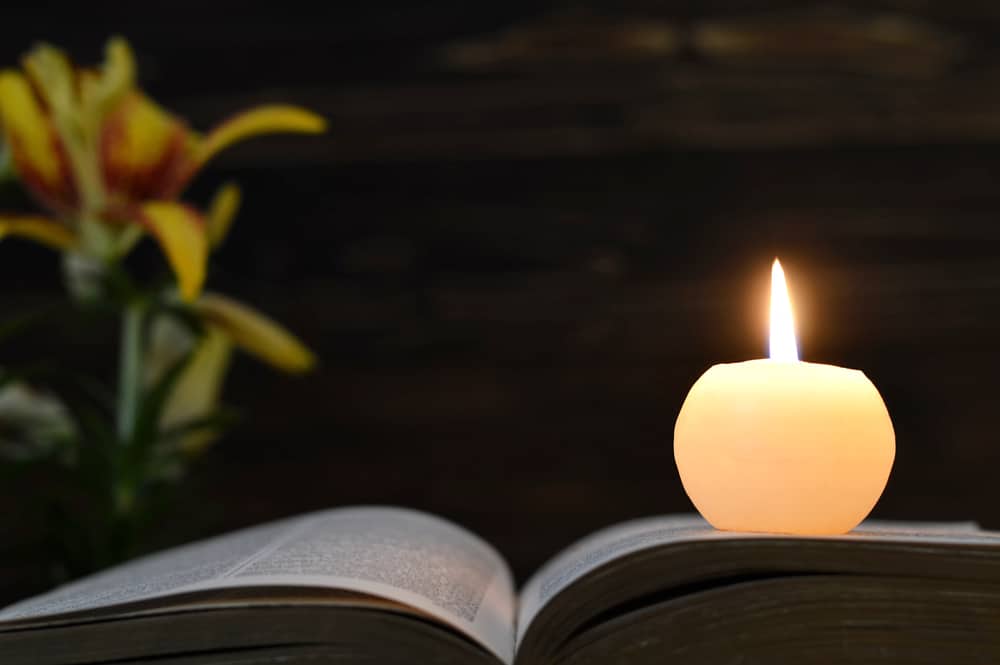
In Hebrew Yahrzeit represents the annual anniversary of the death of a person. It is custom to light a 24-hour candle on the evening before the day of Yahrzeit, to recite the Kaddish prayer and observe a few moments of reflection.
Can a Jewish Cremation be performed?
Yes, indeed cremations are becoming more common as an alternative to a traditional burial service. A Jewish cremation can be conducted adhering to Jewish funeral customs and rituals. In this case, the deceased’s ashes are returned to the family, usually within 48 hours, in order that they can be scattered or appropriately interred. A cremation can be performed after a traditional service in the synagogue or temple, or alternatively, you can opt to have the cremation conducted and then arrange a memorial service afterward. This will cost less, as there is no body present, so you do not need to incur the costs of a casket, transportation of the body, or any type of preparation. You can arrange to have a private viewing of the deceased just prior to their cremation to say your last goodbye.
Can a body be transported to Israel for a Jewish burial?
Yes, as with the transfer of the deceased if the death occurred away from home, a body can also be flown to Israel for a Jewish burial if this is required.
Your Jewish funeral director will make all the necessary arrangements and complete the required consulate paperwork.
Should funeral flowers be sent to a Jewish funeral?
Generally, no, funeral flowers are considered an unnecessary adornment. However, some Conservative and Reform Jews are opting to have a small floral tribute to be placed on the casket, this is at the discretion of the rabbi.
It is more common for fruit and food gift baskets to be sent to the immediate family during the period of Shiva as a means to express condolences and offer sympathies.
How do I find and select a Jewish Cemetery?
There are a number of dedicated Jewish Cemeteries around the United States. We have provided a directory for each state and city that lists the Jewish Cemeteries in your area. If you have not already pre-purchased a burial plot, you can consult with your funeral director, who will be able to assist you in selecting which cemetery may best suit your needs and requirements.
What is the Jewish custom for dedicating a headstone or grave marker?
Jewish tradition calls for the marking of a grave or burial plot with a headstone or grave marker, known in Hebrew as a Matzava. It is not formally required as Jewish custom to hold an unveiling and dedication of the Matzava, although it is common practice to do so. The dedication can take place at any time after Shiva, but as most cemeteries rules and regulations do require an extended period of time before a monument can be erected to allow for ground settlement, the formal unveiling and dedication ordinarily take place as close as possible to the first Yahrzeit.

The headstone can be as simple or elaborate as the family desires, but must, of course, conform to the cemetery regulations. Usually, the deceased’s name is inscribed in Hebrew, along with the dates of birth and death and any further personal inscription.
It is not Jewish custom to excessively visit a grave, and when attending a burial it is not proper to visit the graves of others buried at the cemetery. It is considered disrespectful to the person who has died. This is, however, waivered if someone has traveled extensively to attend the funeral.
We hope this has answered some of your questions about Jewish funeral customs.