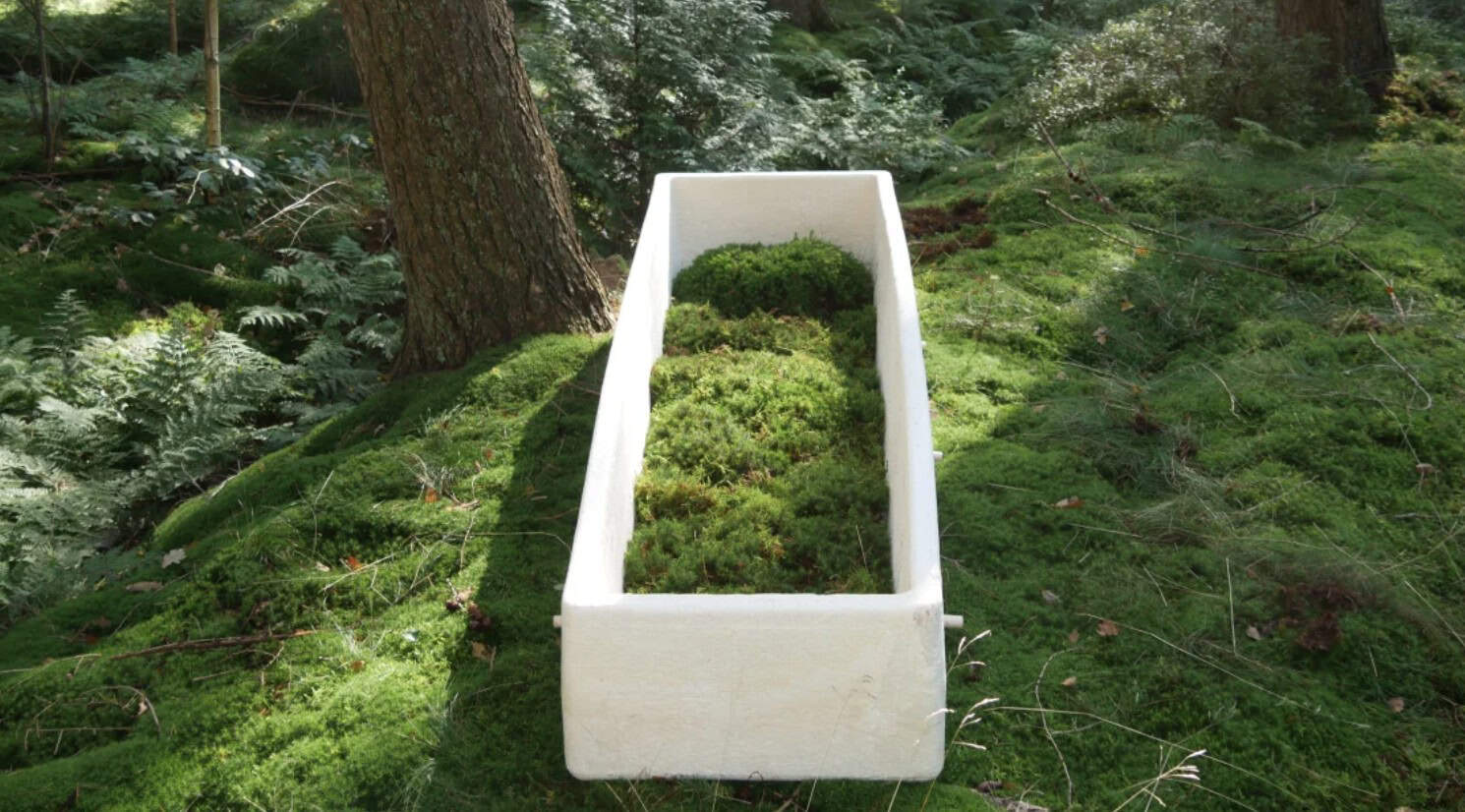
A Guide to Natural Organic Reduction (NOR)
Last updated: September 2026. Prices and provider details verified against provider websites and published reporting.
Our death care rituals are experiencing an epoch of change. Traditional funerals are in decline, and affordable direct cremation is in high demand. The U.S. cremation rate reached 63.4% in 2025, and the National Funeral Directors Association (NFDA) projects it will reach 82.3% by 2045. Alongside that shift, a growing number of families are looking for greener alternatives to both flame cremation and conventional burial: water cremation, green burial, and the newest option of all, human composting.
This guide explains how human composting works, what it costs, who provides it, and how it compares to other options. For the latest on which states have legalized it, see our companion 2026 state-by-state human composting legal tracker.
Human composting: key facts (2026)
- What it is: a controlled process that transforms a body into nutrient-rich soil, typically between half a cubic yard and one cubic yard depending on the provider.
- Also called: natural organic reduction (NOR), terramation, or soil transformation.
- How long: about 30 days in the vessel plus several weeks of curing, typically 6 to 12 weeks in total.
- Typical cost: about $5,950 to $7,000 at the largest providers, usually including core funeral services. Some full-service packages cost more.
- Where it is legal: 14 states as of September 2026. See the full tracker.
- Not legal where you live? Most providers can arrange transport to a facility in a state where it is legal.
What is human composting?
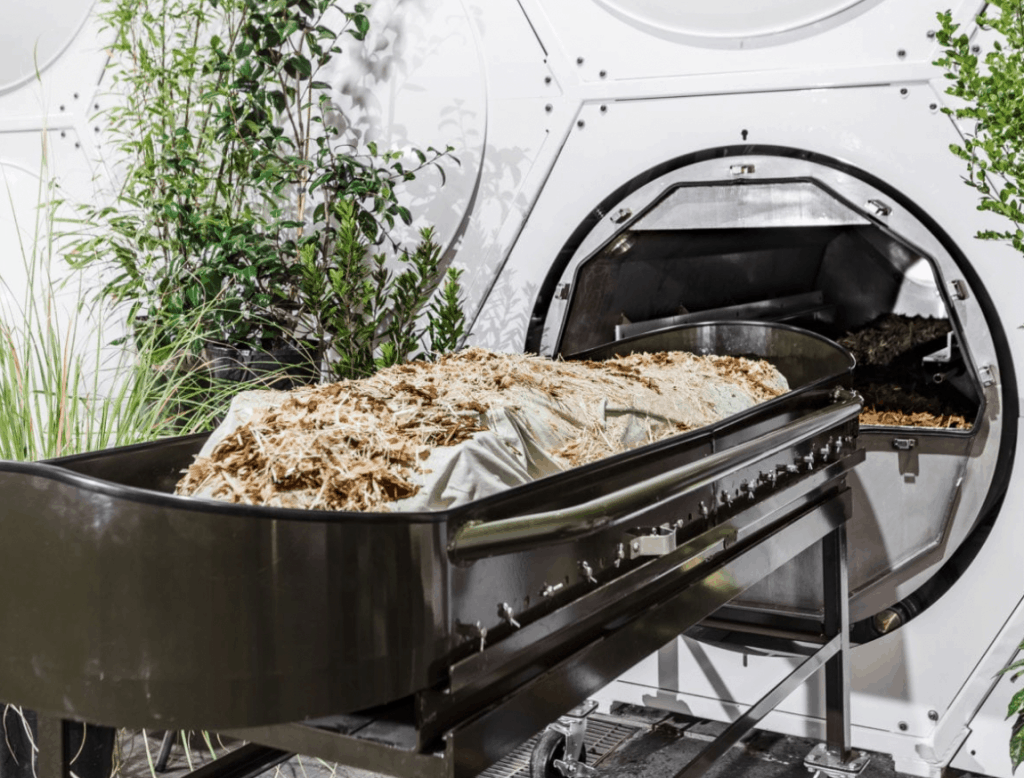
Human composting is an accelerated, controlled form of natural decomposition. The law refers to it as Natural Organic Reduction (NOR). The body is placed in a closed, reusable vessel with plant material such as wood chips, alfalfa, and straw. Oxygen, moisture, and heat are carefully managed so that naturally occurring microbes break the body down into soil in weeks rather than years.
Katrina Spade, founder of Recompose, pioneered the modern practice and led the campaign that made Washington the first state to legalize NOR in 2019. Herland Forest, a natural burial cemetery in Washington, became the first facility licensed to offer it in June 2020. Since then, the option has spread to more than a dozen states, and facilities now operate in Washington, Colorado, Nevada, Arizona, Maryland, and Vermont, with more being built.
How does human composting work? The process step by step
Each provider uses its own system, but the process follows the same basic stages:
- Preparation. The body is not embalmed. Providers wash the body, dress it in a simple biodegradable shroud, and remove pacemakers or other battery-powered devices. Many providers offer a short “laying-in” ceremony for family before the vessel is closed.
- Placement in the vessel. The body is laid on a bed of wood chips, alfalfa, and straw inside a closed steel vessel (Recompose’s original design measured about 8 feet by 4 feet) and covered with more plant material.
- Active decomposition (about 30 days). Air is circulated through the vessel to feed microbes that break down soft tissue. The interior heats naturally to roughly 130–160°F. Holding the material at 131°F or above for at least three days meets the EPA standard for destroying most harmful pathogens.
- Screening. The material is removed and screened. Non-organic items such as surgical implants and dental work are filtered out and recycled where possible. Remaining bone is mechanically reduced and mixed back into the soil.
- Curing (two to four weeks or more). The soil rests in aerated bins so the microbial process can finish and the soil stabilizes.
- Return of the soil. The family receives some or all of the finished soil, or donates it to conservation land.
What happens to the bones when a body is composted?
Bones soften during the heat of the active phase but do not fully break down in 30 days. After the vessel stage, screening separates the remaining bone fragments, which are mechanically reduced (much like processing bone fragments after cremation) and then recombined with the soil before curing. Nothing recognizable remains in the finished soil.
What happens to the soil?
Depending on the provider’s system, the process produces between about half a cubic yard and one cubic yard of soil. Families can usually choose to:
- take all or part of it home to plant a tree or memorial garden,
- scatter it on private land (with the owner’s permission) or where local rules allow, or
- donate some or all of it to a conservation or land-restoration project partnered with the provider.
Some states attach conditions to the soil. Colorado’s law, for example, bars providers from selling soil containing human remains, commingling the remains of more than one person without consent, and using the soil to grow food for human consumption. Your provider will explain the rules that apply to you.
Where is human composting legal?

As of September 2026, human composting is legal in 14 states: Washington, Colorado, Oregon, Vermont, California, New York, Nevada, Arizona, Maryland, Delaware, Minnesota, Maine, Georgia, and New Jersey. California’s law takes effect on January 1, 2027, and bills are pending in many more states each year.
Being legal does not always mean a facility is open locally. In several states, families are still served by providers in neighboring states, and in states where NOR has not been legalized, transport to a facility elsewhere is usually still possible.
See our 2026 state-by-state tracker for the year each state legalized NOR, where facilities are operating, pending bills, and recent changes.
How much does human composting cost?

In 2026, human composting typically costs between about $5,950 and $7,000 at the largest providers. Most quote a package that includes transfer of the body, the composting process, paperwork, and return of the soil. Local full-service funeral homes that add body care, viewing, and ceremonies can charge $9,000 or more.
| Provider | Facility | Published price (Sept 2026) | Notes |
|---|---|---|---|
| Recompose | Seattle, WA | $7,000 | Serves families in all 50 states; prepaid “Precompose” plans and a community fund for families in need |
| Return Home | Auburn, WA | $5,950 | Includes transport to the facility (extra fees may apply by distance) and death certificate filing |
| Earth Funeral | WA, NV and Elkridge, MD | From $5,950 (Maryland package) | Price varies by location; online quote. Optional family visitation extra |
| The Natural Funeral | Arvada, CO | From $9,200 | Colorado funeral home offering terramation in-house; packages with viewing and ceremony cost more |
| NORAZ | Phoenix, AZ | On request | Call 602-888-2133 for current package pricing |
| Herland Forest | Klickitat County, WA | See general price list | Natural burial cemetery; first licensed NOR facility in the U.S. (2020) |
How does that compare? NFDA’s most recent national figures put the median cost of a funeral with viewing and burial at about $8,300, and a funeral with cremation at about $6,280. Human composting is usually cheaper than a full-service burial but more expensive than a simple direct cremation. See our guides to the average cost of cremation, cremation costs by state, and water cremation costs for side-by-side pricing.
Costs that may be extra: long-distance or out-of-state transport, medical examiner fees, certified copies of the death certificate, ceremonies or family visitation at the facility, and memorial items.
How long does human composting take?
The active vessel stage takes about 30 days. Curing adds two to four weeks or more, so families should expect to receive the soil around 6 to 12 weeks after the body arrives at the facility. Recompose, for example, quotes 8 to 12 weeks from time of death to finished soil, while Earth Funeral quotes 30 to 45 days for its process.
How ‘green’ or eco-friendly is human composting?

Flame cremation relies on fossil fuel to hold a chamber at over 1,600°F for three to four hours. By comparison, Recompose states that human composting uses about 87% less energy (roughly one-eighth of the energy of cremation), involves no embalming chemicals, and captures the body’s carbon in the finished soil rather than releasing it into the air. Recompose estimates that each person who chooses NOR over cremation or conventional burial avoids about one metric ton of carbon dioxide.
Those figures come from the industry itself, and not everyone accepts them at face value. A 2023–24 analysis circulated by the Green Burial Council (Dr. Billy Campbell and Lee Webster) points out that the headline savings leave out the energy used to build and run large facilities, the plant material consumed, and the emissions from trucking hundreds of pounds of soil back to families. Their conclusion is that conservation burial, which protects land that keeps absorbing carbon, can deliver larger long-term benefits. Human composting is still a far lower-impact choice than flame cremation or a conventional burial with an embalmed body, metal casket, and concrete vault.
How is human composting being accepted by the funeral industry and religious groups?
The green funeral and natural burial communities have largely embraced human composting as an extension of natural decomposition, made practical for people in cities where a natural burial ground is not within reach.
The wider funeral industry once treated NOR as a curiosity. That is changing. In 2026 Earth Funeral opened a 37,000-square-foot facility in Elkridge, Maryland, designed to hold up to 126 vessels and described in national coverage as the largest human composting facility in the country. Recompose reports serving more than 600 people from its Seattle facility, about one in five of them from out of state. Many funeral professionals underestimated flame cremation and water cremation in the same way.
Opposition remains. In March 2023 the U.S. Conference of Catholic Bishops’ Committee on Doctrine stated that human composting and alkaline hydrolysis do not meet the Church’s requirements for respectful treatment of the body, and state Catholic conferences have opposed legalization bills in New York, Illinois, and elsewhere. Some cemetery and funeral associations have also raised regulatory concerns. Supporters argue that NOR is dignified, safe, and sustainable, and the legislative trend has been steadily toward legalization. Our human composting legal tracker follows the latest bills, including recent votes and vetoes.
Leading human composting providers
Recompose is the pioneer of the modern practice. Founded by Katrina Spade, it now operates a 20,000-square-foot facility in Seattle’s SoDo neighborhood, after starting in a temporary facility in Kent, Washington. Its at-need service costs $7,000 and includes care and guidance from the time of death through to the finished soil. Recompose serves families in all 50 states through partner funeral homes and offers prepaid plans through its Precompose program.
Return Home, founded by Micah Truman, operates a terramation facility in Auburn, Washington. Its $5,950 package includes transport to the facility (with additional fees possible depending on location), death certificate filing, and return of the soil or donation to its woodland property. Payment plans are available for those who plan ahead.
Earth Funeral operates facilities in Washington, Las Vegas, Nevada, and Elkridge, Maryland, and arranges services for families across a growing list of states. Its all-inclusive “Earth” package covers licensed funeral director services, transport, permits and death certificates, the soil transformation process (30 to 45 days), and the return of soil. In Maryland the package costs $5,950 and includes up to five containers of soil; pricing elsewhere depends on location. Arrangements and paperwork can be completed online, and soil the family does not keep goes to conservation land.

The Natural Funeral in Colorado performs terramation in-house at its care center in Arvada, with packages from $9,200 (disposition only) that include collection anywhere on the Front Range, paperwork, and return of the soil. It also supplies its TerraCare system to partner funeral homes, including Sacred Soil in Vermont, the first operational NOR facility in New England, and A.S. Turner & Sons in Georgia, which was awaiting final state certification in July 2026.
Natural Organic Reduction of Arizona (NORAZ) is based in Phoenix and partners with funeral homes to serve Arizona families. It publishes what its packages include but provides prices on request: call 602-888-2133.
Herland Forest is a natural burial cemetery in Klickitat County, Washington, and in June 2020 became the first facility in the U.S. licensed for natural organic reduction. It uses a solar-powered process in a forest setting and can accept remains transported from outside the Pacific Northwest. Its price list is available on request.
How to arrange human composting
- Check availability. Use our state-by-state tracker to see whether NOR is legal and offered in your state, then contact a provider. Many serve families nationwide.
- Tell your family and care team. Make sure the hospice, hospital, or family knows the body must not be embalmed. Record your wishes in writing, and name the person who will have authority to make the arrangements.
- Arrange transport. If the facility is in another state, the provider or a local funeral home will obtain the permits and move the body. Out-of-state transport adds cost. Our guide to transporting a body when death occurs away from home explains how interstate transfers work.
- Plan a ceremony. Families can hold a funeral or memorial before the body goes to the facility, attend a laying-in ceremony where offered, or gather later to plant or scatter the soil. Some families choose to direct parts of the funeral themselves.
- Consider pre-planning. Several providers offer prepaid plans that lock in today’s price.
Who is not eligible? Most people can choose human composting, including registered organ donors. Providers cannot accept bodies that have been embalmed (including whole-body donations to medical science), and exclude a small number of infectious conditions. Recompose, for example, excludes active tuberculosis, prion diseases such as Creutzfeldt-Jakob disease, and Ebola.
Human Composting vs. Cremation vs. Natural Burial
| Option | What remains | Environmental impact | Availability (2026) |
|---|---|---|---|
| Human composting (NOR) | About ½ to 1 cubic yard of soil | Low energy use; carbon held in soil | Legal in 14 states; transport possible elsewhere |
| Water cremation | Bone ash, similar to cremation | Far less energy than flame cremation | Legal in 26 states |
| Flame cremation | Cremated remains (ashes) | Fossil-fuel energy and emissions | All 50 states; usually the lowest-cost option |
| Natural or conservation burial | Body returns to the earth in place | No embalming or vault; conservation sites protect land | Available in most states |
I think Natural Organic Reduction, which sounds more appealing than human composting, will remain a niche within the death care industry, although a faster-growing one than I once expected. I can see how it provides an eco-solution for those wishing for a greener disposition, especially in large urban areas, where a simple green burial in a natural burial ground is not an option.
But, in reality, would improved logistics and availability of natural burial grounds not also provide a solution for expanding eco-burial?
More green cemeteries are emerging across the U.S., and even traditional cemeteries are adding designated green sections to meet demand. You can find one near you in our green burial directory, and state guides such as green burial in California and green burial in New York explain the local rules.
With so much rural green space across the states and a network of funeral homes and transportation services, could a simple natural burial not be offered within a reasonable distance of most urban areas? Innovations such as mushroom coffins, burial suits, and urns are also making natural burial faster and greener.
It will be an interesting development to follow. I am certain we are witnessing a cultural shift towards greener death care. But I think I would still opt for my remains to decompose naturally in a conservation area and return to the earth, rather than a quick reduction in a steel vessel to produce a cubic yard of soil.
Human composting FAQs
Is human composting the same as terramation?
Yes. Natural organic reduction (NOR) is the legal term. Terramation, soil transformation, and human composting are names providers and the public use for the same process.
Can we have a funeral or viewing before human composting?
Yes. A viewing or funeral can take place before the body goes to the facility, as long as the body is not embalmed. Many providers also offer a laying-in ceremony at the facility.
Is human composting safe?
Yes. The heat generated in the vessel destroys most harmful pathogens, and providers are licensed and regulated by the states where they operate. Bodies with a few specific infectious conditions, such as prion diseases, are not accepted.
Is human composting cheaper than cremation?
Usually not. At roughly $5,950 to $7,000 or more, human composting costs more than a direct cremation, but it is often less than a traditional funeral with burial.
Can I choose human composting if my state hasn’t legalized it?
Often, yes. Providers can arrange transport to a facility in a state where it is legal. See our human composting legal tracker for current state-by-state status.
Part of our Complete Guide to Cremation
This human composting (NOR) guide is part of our complete cremation and eco-friendly funeral resource. Explore more:
- Where Is Human Composting Legal? 2026 State Tracker: legal states, facilities, and pending bills
- The Complete Guide to Cremation: how cremation works, costs, options & your rights
- Water Cremation (Aquamation): another eco alternative, with costs and a provider directory
- Green Funerals & Natural Burial and our Green Burial Directory
- Average Cost of Cremation: national & state-by-state pricing
- Cremation Laws Explained


