Losing a loved one is one of the most vulnerable moments in a person’s life. In the fog of grief, making financial decisions feels almost impossible, yet it is precisely when we are asked to make significant purchases. Unfortunately, while the majority of funeral professionals are compassionate and ethical, the death care industry is not immune to bad actors.
In recent years, the landscape of funerals in the United States has shifted dramatically. There has been a massive surge in families choosing cremation over traditional burial, primarily driven by cost and simplicity.
This shift has given rise to a new wave of low-cost online cremation arrangement platforms. While many of these offer genuine value and convenience, they have also created new avenues for fraud. From “ghost” providers to funeral businesses that suddenly close their doors, the risks are real.
This guide is designed to empower you with consumer protection knowledge. We will walk you through how the industry is changing, how to spot red flags, and how to ensure you are working with a trustworthy provider.
By the end of this article, you will know exactly how to avoid funeral scams and honor your loved one with dignity and security.
The Changing Face of Funerals: Digital Convenience vs. Risk

The days of simply using the family funeral home down the street are fading. Today, consumers are turning to the internet to find organizations such as the DFS Memorials, an affordable cremation network, and other direct disposal services.
This digital shift has democratized the industry, often forcing prices down and making pricing more transparent. However, it has also muddied the waters.
The Rise of the Cremation Service “Middleman”

One of the most common pitfalls in the online cremation market is the “middleman” website. These are lead-generation sites that appear to be local funeral homes but are actually marketing companies, sometimes located in a different state or country.
They take your order and your money, then subcontract the work to the lowest bidder in your area—or worse, they don’t have a provider at all. Companies like Heritage and Legacy Cremation Services are examples of this kind of “broker” operation.
And despite consumer complaint reports and cease-and-desist orders in numerous states, Legacy Cremation continues to rank in search results online.
Red Flags: How to Spot and Avoid Funeral Scams

Scammers typically rely on two things: your lack of knowledge about funeral industry rules and your emotional exhaustion. By staying alert to these specific red flags, you can stop a scam before it starts.
1. The “Bait and Switch” Pricing
This is perhaps the most common tactic in the industry. A provider advertises an incredibly low price—let’s say $595 for a cremation—to get you in the door or on the phone. Once you are engaged, they begin adding “mandatory” fees that were not disclosed up front.
Watch out for:
- “Concierge” Fees: Administrative fees that should be part of the basic service fee.
- 24-Hour Removal Fees: Some providers charge extra to pick up the deceased outside “business hours,” even though death rarely follows a 9-to-5 schedule.
- The Casket Upsell: Under the Federal Trade Commission (FTC) Funeral Rule, you have the right to buy a casket or urn from an outside source (like Amazon or Costco), and the funeral home cannot charge you a handling fee. If they insist you must buy their urn to get the package price, walk away.
2. Emotional Manipulation and Guilt: The “Distressed Purchased” Tactic
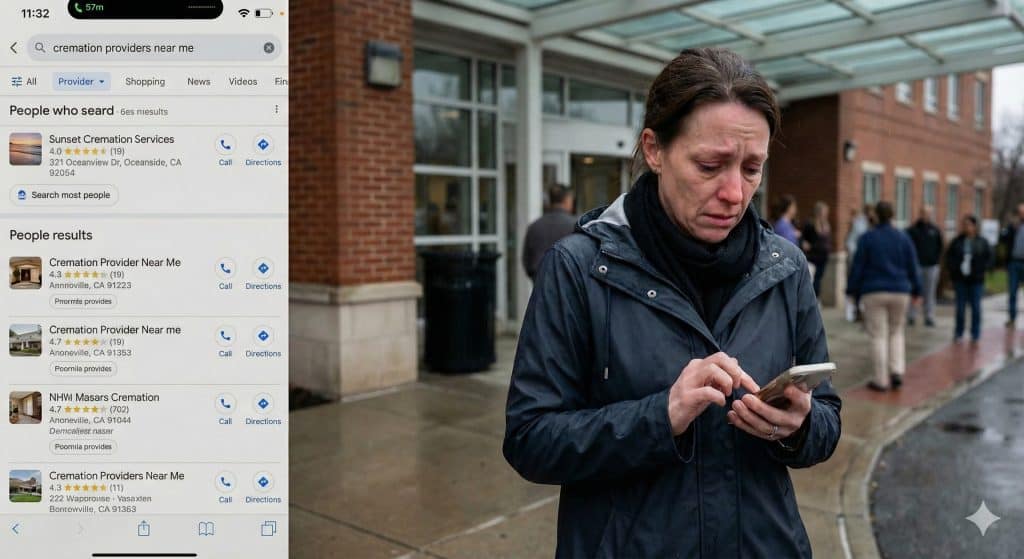
Unethical funeral directors may try to equate the amount of money you spend with how much you loved the deceased. They might say things like, “Doesn’t your mother deserve the protective sealer casket?” or “A direct cremation is a bit cold, don’t you think?”
Consumer Protection Tip:
Protective gaskets on caskets do not preserve the body indefinitely; they merely delay the inevitable. Do not let anyone guilt you into spending thousands on features that have no practical value. Stick to your budget and your plan.
3. The “Embalming is Required” Lie to Add Costs
One of the most persistent myths is that embalming is required by law. In the vast majority of cases, this is false. Embalming is rarely necessary if you are choosing direct cremation or immediate burial.
If a funeral home tells you that you must pay for embalming for a private family viewing or a direct cremation, ask them to show you the specific state law that requires it. If they cannot, it is an attempt to inflate the bill.
Protecting Your Investment: Safe Funeral Preplanning

Many families try to avoid funeral scams by planning ahead. Funeral preplanning is a wonderful gift to leave your family, as it removes the financial and emotional burden of arranging the funeral. However, pre-need fraud is a significant issue, particularly when funeral businesses fail or are bought out by large corporations.
Check out our Funeral Preplanning Resources for more articles to help you plan, save money, and avoid common preplanning pitfalls.
The “Robbing Peter to Pay Paul” Trap
While we often think of scams as the work of faceless criminals, a heartbreaking reality of the modern funeral industry is that fraud often originates from well-respected, local businesses facing financial ruin.
As low-cost cremation providers drive prices down, many traditional, small family-owned funeral homes are struggling to keep the lights on. In a desperate act, some owners began to view their “pre-need” accounts—the money you paid in advance for your future funeral—not as a sacred trust but as a temporary line of credit.
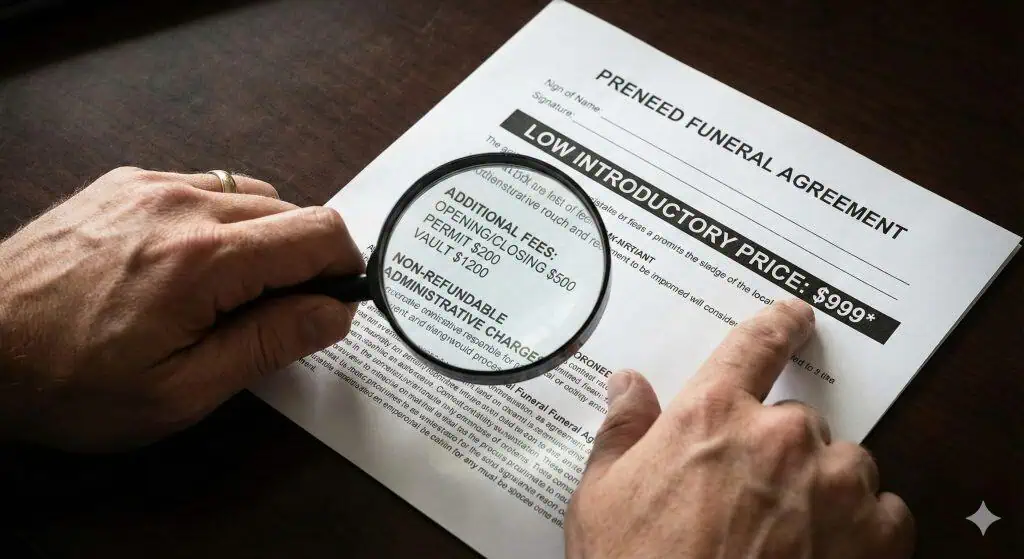
This frequently evolves into a “Ponzi-style” scheme: the funeral director uses the money from your new prepaid contract to cover the business’s operating costs or to pay for the funeral of someone who passed away yesterday. They rationalize that they will pay the money back into the trust when business picks up, but often, it never does.
When these businesses inevitably collapse or declare bankruptcy, the truth comes out: the trust funds are empty. Families who believed they were fully covered are left holding worthless contracts, forced to pay for the same funeral a second time at the worst possible moment.
How to Preplan a Cremation Safely:
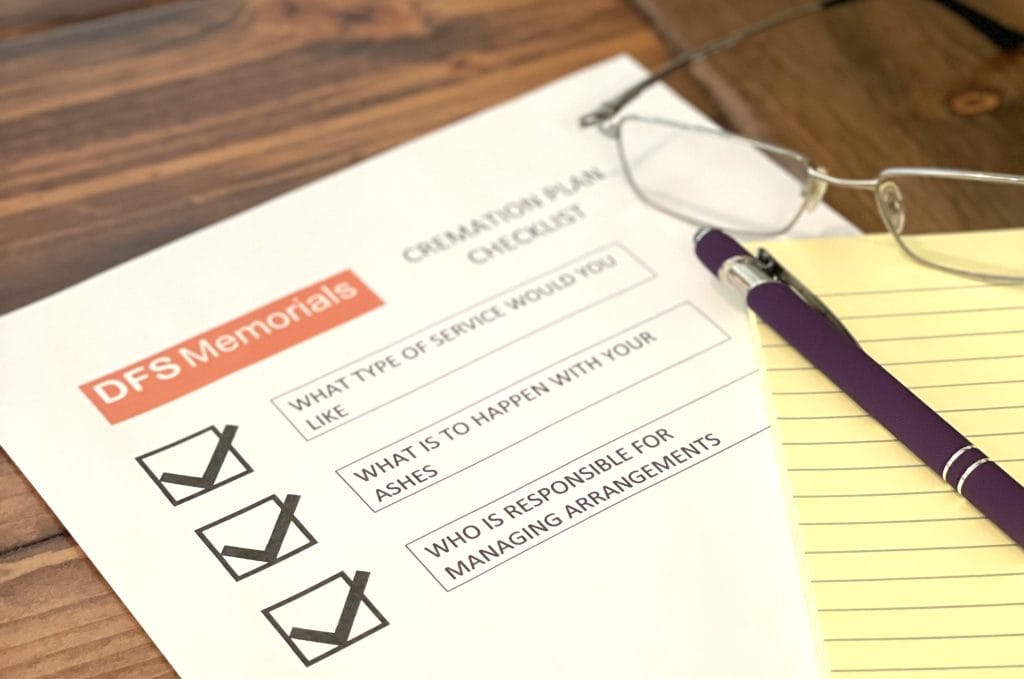
- Demand Portability: Ensure your plan is “portable,” meaning if you move or if that specific funeral home goes out of business, the funds can be transferred to another provider.
- Use Third-Party Insurance or Trusts: Never write a check directly to the funeral director’s personal bank account or the general operating account of the funeral home. Prepaid funds should be deposited into a state-regulated trust or an insurance policy designed for funeral expenses.
- Ask for the Annual Statement: If your money is in a trust, you should receive a report on it. If the funeral home is hesitant to show you where the money is held, this is a significant warning sign.
Finding Trustworthy Brands in a Crowded Cremation Services Market
So, how do you find the good guys? Despite the risks, there are thousands of dedicated, honest funeral directors who believe in transparency and fair pricing. And, despite how overwhelming it can be, there are better options than ever today to help guide you in your decision-making.
The Value of Established Networks that Connect You with Trusted Local Cremation Providers
One effective strategy is to look for networks that vet their providers. For example, DFS Memorials’ affordable cremation network acts as a gateway to local, family-owned businesses.

Unlike the “middleman” sites mentioned earlier, networks like DFS Memorials connect you directly with a local provider who has agreed to offer a low-cost cremation package.
DFS Memorials serves as a trusted (but impartial) gateway to help families find local services they can trust at an affordable price. Many funeral consumers turn to organizations and networks like DFS and Funeral Consumer Alliances (FCA) at a time of need, when finding a low-cost funeral option quickly is imperative.
The benefit of these networks is twofold: you get the low price associated with online comparison, but you are dealing with a licensed, local professional whom you can visit and vet personally.
The Funeral Home “General Price List” (GPL) Test
The Federal Trade Commission requires all funeral providers to give you a General Price List (GPL) when you ask for it. This is the menu of their services.
- The Test: Call a funeral home and ask for their GPL, or check if it is on their website.
- The Pass: They eagerly email it to you or direct you to the link.
- The Fail: They say, “Prices vary, you need to come in and talk to us,” or “We don’t give prices over the phone.” If they refuse to be transparent, they are hiding something.
Check the Funeral License
Before signing any contract, take five minutes to visit your state’s Board of Funeral Directors and Embalmers website. You can search for the funeral home and the specific funeral director to verify their licenses are active and to see if any disciplinary actions have been filed against them.
Conclusion: Vigilance is the Highest Form of Care

Navigating the death care industry can feel overwhelming, especially when you are grieving. However, armed with the proper knowledge, you can protect yourself and your family’s legacy.
Remember that consumer protection in the funeral industry starts with asking the hard questions.
Whether you are looking for DFS Memorials’ affordable cremation options or planning a traditional burial, the principles remain the same: verify the business, demand a General Price List, and never let anyone pressure you into emotional spending.
By taking these steps, you aren’t just saving money; you are ensuring that your final act of love for the deceased is handled with the integrity and respect they deserve.
Ready to protect yourself?
Don’t wait until a crisis occurs to look for information. Take a moment today to research local providers in your area, check their licenses, and request their price lists. A little preparation now can prevent a financial tragedy later.


