Funeral Costs & Options in Texas: 2026 Guide
This guide addresses key questions about arranging funerals or cremations in Texas, including Texas-specific laws, expected costs, and how to find affordable options. With the average traditional funeral in Texas costing around $8,800, and that’s before a cemetery plot and grave marker are added to the total bill, it’s not hard to see why more and more families in Texas are considering cremation as an alternative.
Key Takeaways – Funeral & Cremation Planning in Texas
- Funeral costs in Texas vary widely: Traditional funerals can exceed $8,000, while direct cremation services often start under $1,200 depending on the provider and location.
- Direct cremation is the most affordable option: Many families choose cremation first and hold a memorial or celebration of life later at a church, home, or outdoor venue.
- Texas allows some family involvement in funeral arrangements: While most services are handled by licensed funeral directors, families may still explore simple or alternative memorial options.
- Scattering ashes is permitted in Texas: Cremated remains may be scattered on private property with permission or in many natural settings when done respectfully.
- Green burial options are growing: Texas now has several natural burial grounds offering environmentally friendly burial without embalming or vaults.
- Comparing funeral providers can save thousands: Prices for identical services can vary significantly between funeral homes and cremation providers.

Quick Facts: Funeral and Cremation Costs in Texas
| Service Type | Texas Average (Funeralocity 2026) | Low-Cost Alternative |
|---|---|---|
| Direct Cremation | $2,135 | From $845 (DFS Memorials) |
| Full-Service Cremation | $6,462 | Shop around for under $4,000 |
| Affordable Burial | $5,262 | Green burial from $1,000 |
| Traditional Full-Service Burial | $8,791 | Compare GPL pricing |
Why averages can be misleading: Funeral and cremation costs in Texas vary enormously. One funeral home may charge $640 for a direct cremation while another charges $3,900 for the same service. The averages above include those higher-priced providers, which skew the numbers upward. By comparing prices and choosing a provider like DFS Memorials, Texas families can access direct cremation for between $845 and $995 in most major metro areas.
Understanding Funeral Costs in Texas

Funeral homes are required to provide current retail price information by telephone. According to the law, any consumer entering a funeral home and making inquiries must be presented with a general price list (GPL). This must itemize the costs of funeral services and the merchandise for sale from a funeral director.
The NFDA estimates the national average funeral cost at $7,848. However, this does not take into account any cemetery fees. It would be fair to say that the average traditional funeral in Texas can cost around $10,000.
In recent years, there has been a greater demand for alternative, and indeed more affordable, funerals. Interest in cremation services in Texas has increased because they offer a cheaper option than a traditional burial service.
The cost of a cremation in Texas can be under $1,000, so a meaningful and affordable funeral can be achieved for a tenth of the cost of an elaborate traditional funeral service.
For a detailed breakdown of cremation prices across major Texas cities, visit our Guide to Cremation Costs in Texas.
What to Do When a Death Occurs in Texas

It can be very daunting to know what to do first when a death occurs. When a death occurs in Texas, the determination of death must be made by a coroner, Justice of the Peace, or attending physician.
If the deceased had a prepaid funeral plan or had expressed wishes, these can be implemented immediately. You will need to locate the paperwork and contact the appropriate funeral home or cremation provider.
If the death is sudden and/or the deceased had no funeral plan or life insurance, you may need to make some rather quick decisions about how to proceed.
Choosing a Cremation Service in Texas
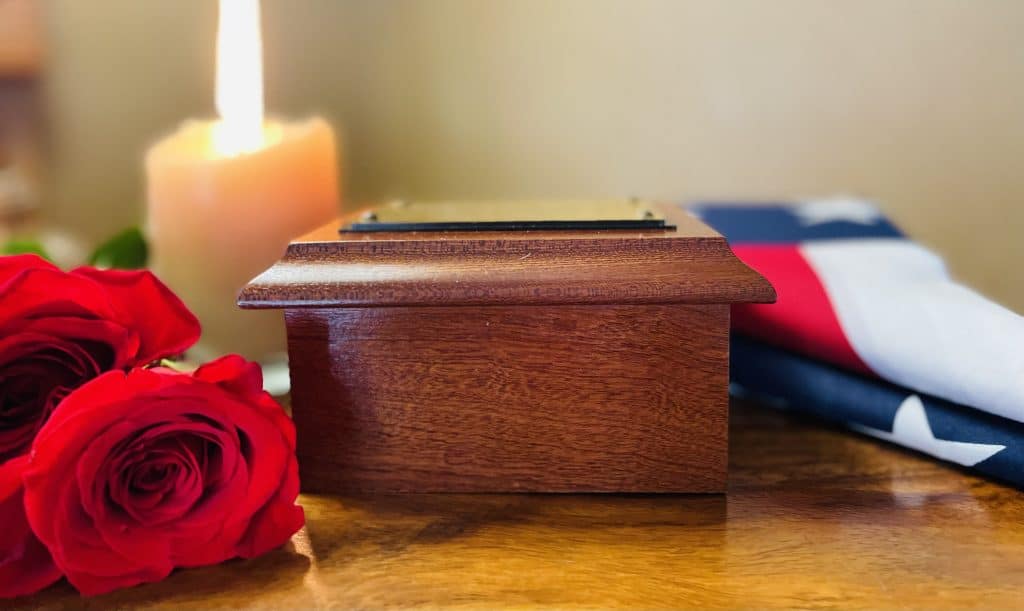
When choosing a cremation service option in Texas, there are several things you should consider. Here are some of the key factors:
Reputation and Experience: If you do not have a trusted funeral service provider, you may wish to research the reputation and experience of a cremation service provider. Look for licensed and reputable funeral homes or cremation providers with a track record of delivering quality services.
What Cremation Services are Offered: Consider the range of services the cremation service provider offers. Some may offer direct cremation, while others may provide additional options like memorial services, viewing arrangements, or assistance with scattering ashes.
The Costs Involved: If you have a budget to manage, you may want to compare the costs of different cremation service providers. Finding a provider that offers transparent pricing and fits within your financial means is essential.
The Facilities and Amenities: If you plan to hold a memorial service or gathering, consider the facilities and amenities offered by the cremation service provider. Ensure they have a suitable space to accommodate your needs. If you are opting for a direct cremation, simple arrangements and the best cost may be your criteria.

Support and Compassion: Choose a service provider that demonstrates empathy, support, and compassion. It’s crucial to feel comfortable and confident in their ability to handle your needs during this emotional time.
Availability and Timeliness of Services: Consider the availability and responsiveness of the cremation service provider. Ensure they can accommodate your desired timeline and promptly address any concerns or questions you may have.
Preplanning and Prepayment Options: Some providers offer preplanning and prepayment options, allowing you to make arrangements in advance. This can help alleviate the burden on your loved ones and potentially save money.
Considering these factors will help you make an informed decision and choose a cremation service option in Texas that best meets your needs and preferences.
Cremation Services and Options in Texas
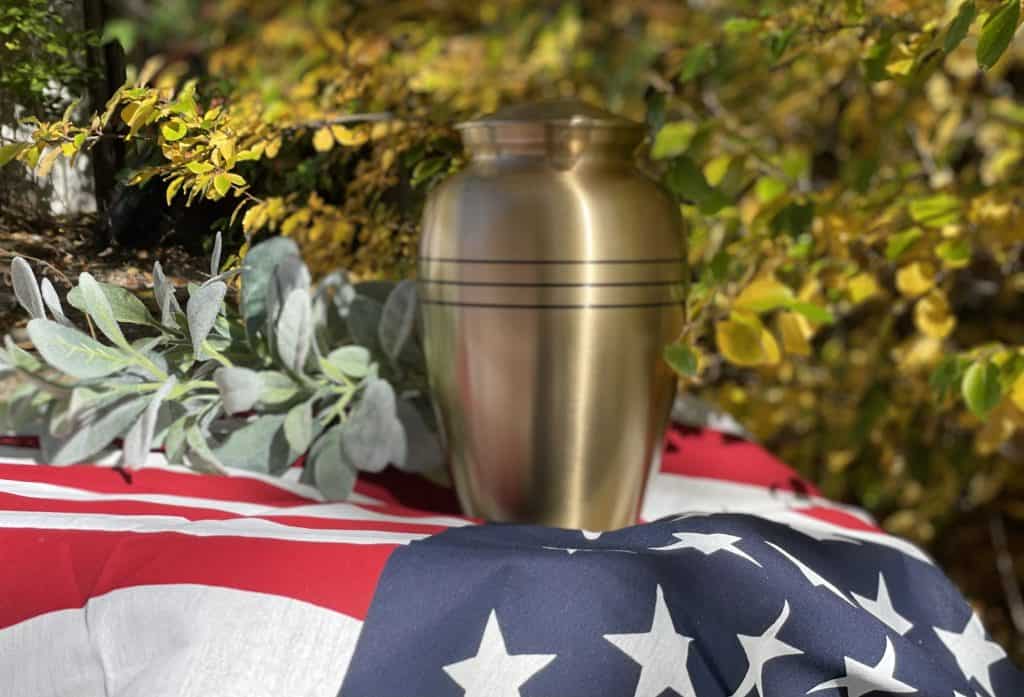
Direct Cremation is the least expensive type of cremation. With a direct cremation, the funeral director chosen is responsible for collecting the body from the place of death, storage of the deceased prior to the cremation, filing the legal paperwork, taking the body to the crematory for cremation, and returning the ashes to the family or next of kin.
Direct cremation in Texas is growing in popularity. After the 48-hour waiting period passes, the deceased is cremated (most often in a simple cardboard container), and the cremated remains are then returned to the family.
Direct cremation in Texas can generally be obtained in many areas for between $845 and $995.
In some rural areas, a direct cremation can be much higher than this, but if you shop around and compare cremation prices, you should be able to obtain a low-cost direct cremation in Texas. If you are concerned about funeral costs, Texas’s DFS Memorials offer low-cost cremation and affordable burial services.
Cremation with a Memorial Service is not much different from a burial service — only the deceased is cremated instead of buried. You can hold a funeral service with the deceased present prior to cremation or conduct the cremation and hold a memorial with the ashes present or not present. Today, we are embracing more novel and alternative memorialization ceremonies. Life celebrations can even be held in locations other than places of worship. Celebrants, as well as traditional clergy and ministers, are leading and officiating at memorial services.
For a comprehensive comparison of cremation service types, pricing by city, and tips for saving money, visit our Guide to Cremation Costs in Texas.
Texas Cremation Authorization and Legislation

Texas law prohibits cremating any dead human body within 48 hours after death. A body cannot be cremated immediately following death without a waiver. Only the County Medical Examiner or a Justice of the Peace may waive this time requirement.
Cremation is such a complete and final disposition of human remains that a mandatory wait period enables the family and the authorities to be clear that cremation is their choice.
After the mandatory waiting period, cremation may proceed. All the legal next of kin must sign a Cremation Authorization Form, and a cremation permit will be issued. In the case of siblings, all must sign to authorize a cremation. Cremation may be prohibited or delayed if there is any disagreement or issue obtaining all signatures.
Visit our article on Cremation Laws and How they Affect Cremation Arrangements.
Texas Funeral Legislation
A family can bury its own dead without using a licensed funeral director in Texas. However, a statement of death and a death certificate are legally required. Local ordinances or deed restrictions generally prohibit private burials within city limits. You must check with the State Health Department and local zoning authorities for applicable laws.
Embalming is the use of chemicals, internally and externally, to disinfect and temporarily preserve the body. Texas law does not require embalming. But most carriers require a body to be embalmed before shipping. The laws of the destination country or state will apply. Because of the rapid deterioration of a body after death, Texas law requires that bodies held for over 24 hours or in transit must be embalmed, refrigerated, or encased in a leak and odor-proof container.
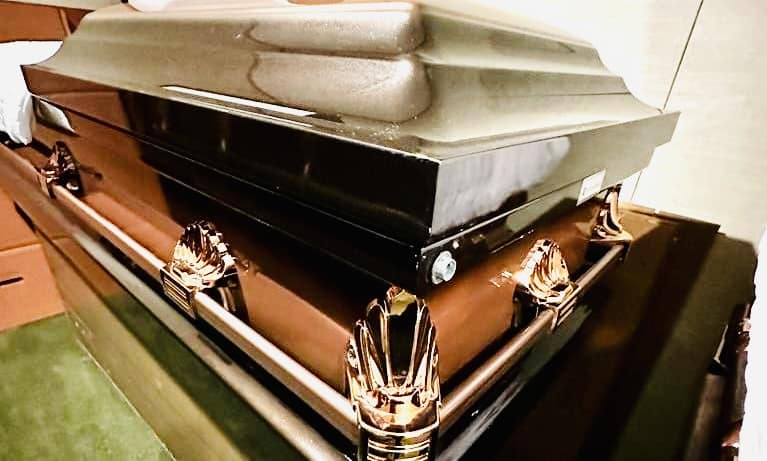
Caskets are not required by law in Texas. However, cemetery or mausoleum restrictions may apply to caskets, outer burial containers, or vaults. The law does not require a casket for cremation, but crematories usually require some type of container, such as a cardboard box or a canvas pouch.
To learn more about cremation services, the cremation process, secure ID tracking, cremation regulations, and laws, visit our Ultimate Guide to Cremation.
Donating Your Body to Science in Texas

You may choose to make an anatomical donation to a medical or research institution in Texas. Most major medical colleges accept body donations. Companies in the U.S. manage whole-body donation programs and offer a ‘no-cost’ cremation in Texas.
Be aware that not all donations get accepted at the time of death. So, it is advisable to have a plan for a cremation service provider.
End-of-Life Support & Death Doula Services in Texas

Planning for end-of-life care in Texas is about more than legal documents or funeral arrangements — it’s about ensuring comfort, clarity, and dignity during one of life’s most vulnerable transitions. End-of-life support professionals, often known as death doulas or end-of-life doulas, provide non-medical, holistic guidance to individuals and families before, during, and after death. Their services may include advance care planning, emotional and spiritual support, legacy projects, family advocacy, bedside presence, and grief support, all tailored to the laws, resources, and care options available in Texas.
Whether working alongside hospice or supporting families independently, death doulas help reduce fear, ease decision-making, and ensure that a person’s final wishes are understood and honored. Families can explore local end-of-life doulas and support services through our Texas Death Doula Directory.
What Happens If Your Loved One Dies Away from Texas?

Unfortunately, this is happening more frequently as Texans travel and people relocate for employment. Coping with a death is very distressing, but if it has occurred while your loved one was away from home, it can be even more difficult.
Shipping a body, domestically or internationally, can be prohibitively expensive. The typical professional fee for a funeral director to coordinate the collection of the body at the place of death, prepare the body for shipping, and handle all relevant documentation can range from $3,000 to $4,000, and this does not include freight charges. For this reason, many choose to cremate at the place of death and have the cremated remains shipped back.
To learn more, visit our section on Funeral Shipping.
If you travel regularly, you may consider purchasing repatriation coverage. A Travel Protection Plan is an affordable assurance policy that covers an individual for ALL funeral expenses if they should die while away from their home in Texas.
This plan costs just $450 for a lifetime membership, providing peace of mind by protecting your family from stress, financial burdens, and the hassle of arrangements. One call to the insurance company upon a death, and all arrangements are handled for the family. Click on the link below to read more and enroll.

Hispanic Funerals in Texas
Texas has one of the highest concentrations of Hispanic residents. Although many Hispanics and Latinos choose to repatriate remains, the rapidly growing Hispanic-American population also chooses Texas as their final resting place. Therefore, there are several dedicated Hispanic-owned funeral homes in Texas.
Visit our Texas Funeral Planning Guide in Spanish if you need the services of a Hispanic Funeral Home. You can find contact details of funeral homes specializing in Hispanic funeral services.
Planning a Green Funeral in Texas
There is growing interest from families in green or natural funeral options. Texas has many rural areas, and burial has traditionally been a preferred option. Although there has been a shift to cremation in recent years, demand has largely been driven by its lower cost and greater availability.
As we all become more environmentally conscientious and climate change becomes a mainstream agenda and responsibility for us all, some families are looking towards natural or green burial as an alternative (and more affordable) option.
It is possible to arrange a green funeral in Texas for as little as $1,000, although the average cost is nearer to $3,500.
Visit our Guide to Green Burial Services and Cemeteries in Texas to learn more about arranging a green funeral near you.

Texas Funeral Home Reviews and Complaints
Our online review-based consumer culture has reached the funeral business, and now you can review and compare funeral homes in Texas online. Directory sites often include local business reviews, which can help you learn about a funeral or cremation provider. As with any service or product review, common sense and integrity are required.
If you have a complaint against a funeral director or funeral establishment, you should first attempt to resolve it directly with the funeral home concerned. You can contact the Texas Funeral Service Commission if you do not reach a satisfactory resolution. A formal complaint against a funeral establishment must be submitted in writing to the funeral home and include copies of all documentation from the funeral home.
Texas Funeral Service Commission
P.O. Box 12217
Capitol Station
Austin Texas 78711
Hopefully, this guide to arranging a funeral or cremation in Texas has answered some of your questions. Please use our funeral resource library to access additional articles to help you arrange a funeral.
Sending flowers to a funeral in Texas? Our funeral flowers guide covers what to send, typical costs, card messages, and how to make sure flowers reach the funeral home in time.
Related Articles:
- Cremations in Dallas-Fort Worth: 5 Tips for arranging an affordable cremation
- Funeral Homes catering to the Hispanic Population
Resources:
DFS Memorials – Save on Cremation Costs in Texas
Guide to Cremation Costs in Texas
Funeral & Cremation Planning Guide – Austin
Funeral & Cremation Planning Guide – Dallas
Funeral & Cremation Planning Guide – Fort Worth
Funeral & Cremation Planning Guide – El Paso
Funeral & Cremation Planning Guide – Houston


