Funeral Costs in Alabama: 2026 Guide
Losing a loved one is never easy, and understanding funeral costs in Alabama helps you make informed decisions during a difficult time. Whether you’re planning ahead or arranging services right now, this guide covers everything from traditional funerals to cremation, green burials, financial assistance, and state regulations.
Quick Facts: Funeral Costs in Alabama
Planning a funeral in Alabama typically involves several major expenses. A traditional full-service burial averages around $8,428. If you prefer cremation, direct cremation services start at $895 to $1,200 through cremation networks like DFS Memorials.
According to the most recent data, about 40% of Alabamians chose cremation in 2025 — still well below the national average of roughly 63%, but growing steadily as more families seek flexible and affordable options. Funeralocity data shows that the Alabama state average for direct cremation is $2,032, full-service cremation averages $6,137, while an affordable burial runs $5,041, and a traditional full-service burial averages $8,428.
Funeral costs in Alabama vary widely depending on the type of service chosen. The table below highlights the typical price ranges and what families can expect from each option.
| Service | Typical Cost in AL | What is Included | Best For |
|---|---|---|---|
| Direct Cremation | $895 – $2,200 | Transfer of the deceased Basic services of funeral director cremation process temporary urn | Families wanting the simplest and most affordable option |
| Cremation with Memorial Service | $2,500 – $4,500 | Direct cremation plus memorial service planning and use of chapel or venue | Families who want a ceremony but without the cost of burial |
| Cremation with Viewing & Service | $4,000 – $6,500 | Embalming, viewing/visitation, rental casket, funeral service followed by cremation | A more traditional funeral experience with cremation |
| Traditional Funeral with Burial | $7,500 – $12,000+ | Embalming, viewing, funeral ceremony, casket, burial vault, cemetery fees | Families choosing traditional burial and graveside service |
Death certificate costs are minimal—just $15 for your first copy and $6 for additional copies from the Alabama Department of Vital Statistics. Federal benefits like Social Security’s one-time death benefit of $255 (if eligible) can help offset some expenses.
Understanding Your Funeral Cost Breakdown

Funeral expenses in Alabama fall into several categories, and understanding each helps you budget effectively.
Funeral home services and overhead typically make up the largest expense. This covers the funeral director’s time, staff, facility use for viewings or services, and administrative costs. Most funeral homes charge for these services separately from other items you select.
Caskets and containers vary dramatically in price, from simple wooden boxes under $500 to metal caskets exceeding $5,000. If you choose cremation, you’ll need a cremation container (usually $50–$300) rather than a casket. Learn more about casket options and how to save on this major expense in our complete guide to caskets.
Burial or disposition costs depend on your choice. Cemetery plot purchases run $500–$3,000+ depending on location and whether the cemetery is municipal or private. Grave opening and closing fees typically range from $500–$1,500. Perpetual care fees (also called endowment care) ensure ongoing grounds maintenance and average $300–$500 per grave.
Vault or grave liner costs are often required by cemeteries and protect the casket from soil settling. These run $800–$2,500 depending on materials and construction.
Professional services include embalming ($400–$800), hair and makeup ($100–$200), dressing and casketing ($100–$300), and transportation of the deceased ($200–$500).
Flowers, music, and ceremony add-ons let you personalize the service but increase costs. A simple flower arrangement might cost $100–$300, while elaborate floral tributes can exceed $1,000. Organists, singers, or musicians add $100–$500+ to the bill.
Death certificates and permits are essential paperwork. You’ll need at least several certified copies (order more than you think you’ll need—many institutions require originals). At $15 per first copy and $6 per additional copy, this is a manageable expense.
Newspaper obituaries and announcements typically cost $100–$400, depending on length and publication, though many papers now offer free online obituaries with paid print options.
Clergy or officiant fees usually range from $150–$500, though some clergy donate their time.
Choosing a Funeral Home in Alabama
Selecting the right funeral home shapes your entire experience. Alabama law requires a licensed funeral director to oversee all disposition of human remains—whether burial, cremation, or other options—so you’ll be working with a licensed professional.
Start by gathering price lists from at least two or three funeral homes. Alabama law entitles you to this information over the phone or in person at no charge. The FTC Funeral Rule requires funeral homes to provide a General Price List itemizing all services and merchandise. Review this carefully and ask questions about items you don’t understand.
Visit the funeral homes in person if possible. You want to feel comfortable in the space where you’ll be saying goodbye. Notice the quality of facilities, the professionalism and compassion of staff, and whether they answer your questions patiently. Some families prefer larger homes with multiple viewing rooms and chapels; others feel more at home in smaller, family-owned establishments.
Ask about package deals, but don’t let bundled pricing obscure individual costs. The FTC Rule requires that funeral homes also offer itemized pricing, not just packages, so you pay only for services you actually want.
Check online reviews on Google and the Better Business Bureau, but take any single review with a grain of salt. Look for patterns—do reviewers consistently praise or criticize specific aspects of service?
If budget is a concern, don’t hesitate to ask if the funeral home offers payment plans or works with local assistance programs. Many do.
Burial in Alabama: Costs and Considerations

Traditional burial remains a meaningful choice for many Alabama families. Beyond the casket and funeral home services, burial involves cemetery costs and professional services specific to ground burial.
Cemetery choices include municipal cemeteries (often the most affordable), private cemeteries, and church cemeteries. Municipal cemeteries in major Alabama cities typically charge $500–$1,500 for a burial plot, while private cemeteries often charge more. Church cemeteries may be available to members at reduced cost or even free.
Grave preparation and closing involves opening the grave before the funeral and closing it afterward. These services typically run $500–$1,500 combined, though fees vary by cemetery and region.
Vaults and grave liners are often required by cemeteries to prevent ground settling. A basic grave liner costs around $800–$1,200, while a steel vault runs $1,200–$2,500. Some cemeteries don’t require these if you use a sturdy casket, so ask before committing.
Perpetual care fees (endowment care) ensure the cemetery maintains your grave indefinitely. These typically cost $300–$500 per grave and are a one-time payment that protects your family from future cemetery fees.
Grave markers and monuments honor your loved one’s memory. Simple bronze plaques cost $400–$800, while traditional marble or granite monuments can exceed $3,000. Our detailed guide to grave markers covers styles, pricing, and what to expect.
If you’re concerned about burial costs, ask the cemetery if they offer green burial options—natural burial without vaults, chemical embalming, or elaborate markers can reduce overall expenses while honoring environmental values.
Cremation in Alabama: An Overview
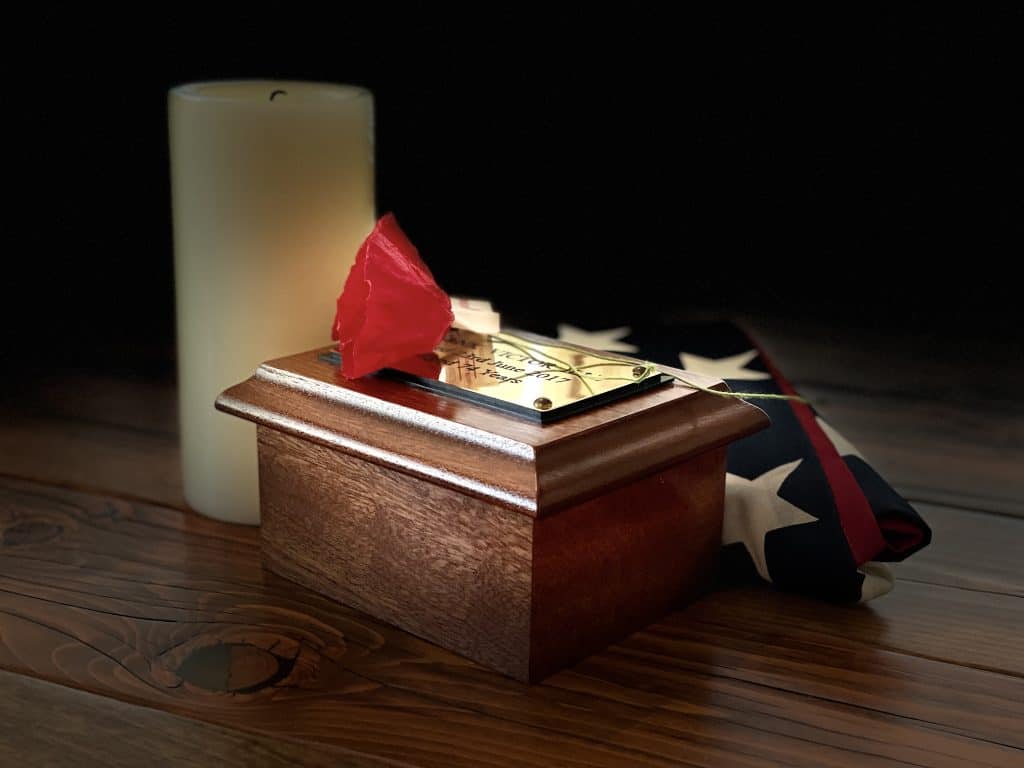
Cremation is increasingly popular in Alabama, offering families a more affordable and flexible alternative to traditional burial. Direct cremation—where the body is cremated shortly after death without viewing or ceremony—costs significantly less than traditional funerals, typically ranging from $895 to $1,200 through cremation networks like DFS Memorials, or $1,500 to $3,500 when arranged through a traditional funeral home. Many families choose cremation for its lower cost, environmental benefits, and the flexibility to hold a memorial service later, if at all.
For a full breakdown of cremation pricing, options for handling ashes, Alabama cremation laws, and how to find a low-cost cremation provider, see our guide to cremation costs in Alabama.
Green and Natural Burial in Alabama
A growing number of Alabamians are choosing green and natural burial, which honors environmental values while often reducing costs compared to traditional funerals.
Green burial uses no embalming chemicals, no vaults or grave liners, and biodegradable caskets or burial shrouds. The body returns to the earth naturally, enriching the soil for future plant life. This approach can save $1,500–$3,000 compared to traditional burial by eliminating vaults, embalming, and expensive caskets.
Natural burial cemeteries in Alabama remain limited, but a few options exist. Research natural burial cemeteries in your region, and consider whether nearby states have options if Alabama’s current selection is limited. Some traditional cemeteries have begun offering green burial sections—ask your cemetery about this possibility.
If a full green burial doesn’t fit your needs, consider hybrid approaches: skip embalming, choose a simple wooden casket, decline the vault, and select a natural setting burial plot. Each choice reduces costs and environmental impact.
Embalming and Alabama Law
Embalming is a common practice, but not legally required in Alabama unless the body will be transported by airplane, displayed for several days, or if state health regulations apply in specific circumstances.
If you’re arranging a funeral with a viewing and burial, the funeral home will typically recommend embalming to preserve the body’s appearance. Embalming typically costs $400–$800.
If you’re planning direct cremation or prompt burial, you can decline embalming and save substantially. Just ask your funeral director clearly: “We do not want embalming.” If the body won’t be viewed and burial or cremation happens within 24–48 hours, embalming is unnecessary and can be skipped.
Alabama has no mandatory waiting period before cremation, so families can proceed relatively quickly if they choose cremation.
Alabama Funeral Regulations and Your Rights

The Federal Trade Commission (FTC) oversees funeral practices nationwide through the Funeral Rule, which applies in Alabama. This rule requires funeral homes to:
- Provide price lists itemizing every service and product, with per-item pricing available in addition to package pricing
- Give you the Funeral Rule explanation in writing
- Allow you to purchase items (like caskets) from outside vendors rather than forcing you to buy from the funeral home
- Disclose any price-setting arrangements with cemeteries or crematoriums
- Clearly explain which services are required by law versus optional
Alabama also licenses and regulates funeral directors through the Alabama Board of Funeral Service. Licensed funeral directors must oversee all dispositions of human remains in the state. If you have concerns about funeral home practices or want to file a complaint, contact:
Alabama Board of Funeral Service
PO Box 309522
Montgomery, AL 36130
Phone: 334-242-4049
Pre-Planning Your Funeral and Setting Aside Funds
Pre-planning your funeral—before it’s needed—gives you peace of mind and ensures your wishes are honored.
Discuss your preferences with family. Do you want cremation or burial? Where would you like to be buried? What kind of service or memorial do you envision? Writing these preferences down prevents confusion and disagreement later.
Consider pre-paid funeral plans. Some families pay funeral homes in advance, locking in current prices and removing financial burden from survivors. However, approach prepaid plans carefully. Read all terms, understand what happens if you move out of state, and verify the funeral home is reputable. Pre-paid funds should be held in trust, not in the funeral home’s general operating account. Ask questions before signing.
Explore funeral savings accounts or life insurance. A dedicated savings account or small life insurance policy ensures funds are available when needed without burdening survivors. Some employers offer funeral assistance benefits—check your employee handbook.
Create a funeral planning document. Write down your wishes regarding service style, music, readings, charitable donations in lieu of flowers, preferred charities, and any cultural or religious preferences. Include your funeral home choice if you’ve selected one. Give copies to your family, executor, and attorney.
Keep important documents organized. Your family will need to locate your will, life insurance policies, bank account information, and property deeds. A fireproof box or digital account (like a password manager) helps survivors find what they need quickly.
Death Away from Home: Funeral Shipping
If your loved one passes away in another state or country, bringing them back to Alabama involves funeral shipping services. These are managed by funeral directors and licensed transporters who handle all paperwork, permits, and logistical details.
Funeral shipping costs typically range from $1,000–$3,000+ depending on distance, mode of transport (ground vs. air), and whether embalming or special handling is required. International transport costs more and involves additional permits and customs documentation.
Your Alabama funeral home will coordinate all details with the funeral home or transport company in the other location. You won’t need to manage logistics yourself—that’s the funeral director’s job. However, understand the costs upfront and ask if shipping is included in a package price or billed separately.
For detailed information about funeral shipping and what to expect, see our guide to transporting a body.
Death Doulas: A Supportive Addition

Death doulas are end-of-life care companions who provide emotional, practical, and logistical support to dying people and their families. They’re not medical professionals—instead, they provide comfort measures, support communication with doctors and funeral professionals, and offer emotional support throughout the dying process and early grief.
Working with a death doula can reduce stress and help ensure your loved one’s wishes are understood and honored. Death doulas often charge $25–$50 per hour or offer package rates for ongoing support. Some work independently; others partner with hospices or funeral homes.
Learn more about how death doulas support families and find providers in your area in our Alabama Death Doula Directory.
Veteran Benefits and Military Funeral Honors
If your loved one was a military veteran, you may qualify for benefits that reduce funeral costs.
The Social Security Administration provides a one-time death benefit of $255 to eligible survivors—not a large amount, but worth claiming.
Military burial honors are provided free of charge at military cemeteries and many civilian cemeteries with veteran sections. Honors typically include a flag presentation, taps ceremony, and a rifle volley. Your funeral director can request military honors when you arrange the funeral.
Alabama has three state veterans cemeteries:
- Alabama Veterans Cemetery at Montevallo – Has available burial space for eligible veterans and their spouses. Contact: 205-665-2321
- Alabama Veterans Cemetery at Fort Mitchell – Also has available space. Contact: 334-855-4121
- Alabama Veterans Cemetery at Mobile – Currently closed to new interments but may reopen
Military cemeteries typically charge little to nothing for burial plots (often just a minimal establishment fee), making them significantly more affordable than civilian cemeteries. If your loved one was a veteran, always check eligibility and availability before committing to a civilian cemetery.
For more information about veteran benefits and military funeral honors, contact the Veterans Benefits Administration at 1-800-827-1000 or visit va.gov.
Body Donation in Alabama
Donating your body to medical science or education offers an alternative to burial or cremation and can eliminate most funeral costs. The University of Alabama at Birmingham and the University of South Alabama both operate body donation programs.
If you choose body donation, the medical school handles transportation and funeral arrangements at no cost to your family. However, you should arrange this well in advance and understand that not all bodies are accepted (some may be declined for medical reasons). There may be a cremation and return of ashes to your family afterward, or the ashes may be scattered at a memorial ceremony.
Body donation is a profound way to contribute to medical education and research. To explore this option, contact:
- University of Alabama at Birmingham – Anatomy Department
- University of South Alabama – College of Medicine Anatomy Department
Ash Scattering and Memorial Options After Cremation

If you choose cremation, you’ll need to decide what to do with the ashes. Common options include:
- Burial in a cemetery plot under a grave marker
- Placement in a columbarium (a wall of niches designed for cremated remains)
- Scattering in a meaningful location
- Keeping at home in a decorative urn
- Splitting ashes among family members
Alabama has no statewide restrictions on ash scattering on private land (with owner permission) or at sea. Some parks and public lands have specific rules, so check before scattering.
For detailed options, scattering ceremonies, and memorial planning after cremation, see our ash scattering guide.
Death Certificates: What You Need to Know
You’ll need certified copies of the death certificate for many purposes: probate, insurance claims, bank account access, deed transfers, Social Security claims, and more. It’s wise to order more than you think you need—extra copies are inexpensive, and running out later is frustrating.
Cost: $15 for the first certified copy, $6 for each additional copy
Where to obtain: Alabama Department of Vital Statistics or your county health department
Processing time: Usually 1–2 weeks by mail; faster if you visit in person
The funeral director will typically file the death certificate for you and offer to order copies. However, you can also order them directly from the Alabama Department of Vital Statistics if you prefer.
Financial Assistance for Funeral Costs
If funeral expenses are straining your budget, several resources may help:
Social Security death benefit: A one-time federal benefit of $255 for eligible survivors. Contact your local Social Security office to apply.
Veterans’ benefits: If your loved one was a military veteran, burial in a state or national veterans cemetery may be free or low-cost, and military funeral honors are provided at no charge.
Medicaid: Some states cover burial assistance for low-income families through Medicaid, though Alabama’s current program is limited. Ask your funeral director or local social services office.
Religious organizations and nonprofits: Many churches, synagogues, mosques, and community organizations provide funeral assistance to members or low-income families. Ask your faith community or local social services agency for referrals.
Mutual aid networks: Community-based organizations sometimes pool resources to help families in financial hardship. Check with local nonprofits serving your community.
Payment plans: Most funeral homes offer payment plans allowing you to spread costs over several months with little or no interest. Don’t assume you must pay in full immediately—ask about this option.
Discount funeral homes: Some funeral homes specialize in affordable, direct cremation or minimal-cost services. The DFS Memorials network, for example, connects families with cremation providers offering lower-cost options.
Conclusion: Planning Ahead Brings Peace of Mind
Understanding funeral costs in Alabama empowers you to make choices that honor your loved one while respecting your budget. Whether you choose traditional burial, cremation, green burial, body donation, or a combination of options, you have flexibility and choices.
The key to managing funeral expenses is education and planning. Discuss your preferences with family, gather price information from multiple funeral homes, understand your legal rights under the FTC Funeral Rule and Alabama regulations, and explore all available options—including financial assistance programs.
If you’re pre-planning, take action now while you have time to research thoroughly. If you’re arranging a funeral immediately, don’t hesitate to ask questions, request item-by-item pricing, and seek out less expensive options. Your funeral director is there to help guide you through the process with compassion and clarity.
Resources and Related Guides
Cremation Costs in Alabama – Full cremation pricing, regulations, and provider options
Caskets: Styles, Pricing, and Savings – Complete casket guide and how to buy from outside vendors
Grave Markers and Monuments: Guide to Choices and Costs – Types, materials, and pricing for memorial stones
Funeral Shipping and Transporting a Body – How funeral shipping works and what to expect
Body Donation: An Alternative to Burial and Cremation – Overview of body donation programs nationwide
Ash Scattering: Options and Ceremonies – What you can do with cremated remains
Death Doulas: Support at the End of Life – How death doulas help families
DFS Memorials Network – Affordable cremation services across the U.S.
Alabama Board of Funeral Service – PO Box 309522, Montgomery, AL 36130; 334-242-4049
Federal Trade Commission Funeral Rule – ftc.gov/funerals
Sending flowers to a funeral in Alabama? Our funeral flowers guide covers what to send, typical costs, card messages, and how to make sure flowers reach the funeral home in time.


