This guide will help you understand cremation costs in North Carolina. We have included a price comparison for cremation services across major cities, practical tips for saving money, and essential information for arranging a cremation service in North Carolina.
As more families turn to direct cremation in North Carolina as a more affordable and flexible alternative, it’s important to explore the various options available. Deciding on the right cremation service for your needs is a crucial step in planning.
How much does cremation cost in North Carolina?
Firstly, let us mention that the cost of cremation service can vary significantly. This can depend on the type of cremation service you opt for, ancillary services, and the service provider selected.
Funeral homes can still be notoriously poor at divulging their prices online or by phone, but according to the FTC Funeral Rule should furnish you with a General Price List (GPL) or pricing on cremation service packages when you make inquiries.
A cremation service can cost from $1,196 to $4,800, depending on the package you opt for and the funeral home you select.
Best direct cremation prices by city in North Carolina
To help you determine how cremation costs compare and what you can expect to pay for a direct cremation in North Carolina, we have outlined below a table of average direct cremation prices by city.
| City | AVERAGE PRICE | BEST PRICE (DFS) | CALL NOW (DFS) |
|---|---|---|---|
| Charlotte | $1,768 | $1,196 | (704) 314-9404 |
| Fayetteville | $2,745 | $1,196 | (910) 212-6383 |
| Raleigh | $2,154 | $1,196 | (919) 213-7889 |
| Greensboro | $1,940 | $1,196 | (336) 223-5180 |
| Durham | $2,154 | $1,196 | (919) 213-7889 |
| Winston-Salem | $1,940 | $1,196 | (336) 223-5180 |
| Wilmington | $2,102 | $1,196 | (910) 212-6383 |
For cremation costs in other areas of North Carolina – visit DFS Memorials North Carolina for cremation prices and locations.
What is the least expensive cremation option?

Direct Cremation is the least expensive cremation disposition option. It is a basic service package in which the deceased is collected and cremated, and the cremated remains are returned directly to the legal next of kin. The funeral service provider conducts no ceremony.
The cremation is complete, and the ashes are available to the family or mailed via USPS Priority Mail. All arrangements can be made without the next of kin needing to visit a funeral home, and over 40% of funeral homes offer online arrangements on their websites today.
Once the family has the cremation ashes, they can arrange to hold their own Memorial Service. This minimal, economical disposition service offered by a funeral home helps reduce funeral costs. It also gives the family greater control over when and where to memorialize the deceased.
Cremation Cost Comparison: Traditional Funeral Home vs. Neptune Society vs. DFS Memorials
When families in North Carolina compare cremation prices, they quickly discover that advertised costs can vary dramatically depending on who they call and how the service is structured. While “direct cremation” is often described as the simplest and most affordable option, the reality is that pricing, service models, and transparency differ widely between traditional funeral homes, national cremation brands, and referral-based networks like DFS Memorials. Understanding these differences is essential before making a decision—especially at a time when families are emotionally vulnerable and under pressure to act quickly.
Traditional Funeral Homes in North Carolina
Most traditional funeral homes in North Carolina offer cremation alongside burial services. Their advertised direct cremation price typically ranges from $1,500 to $3,500, though it can be higher in metro areas such as Raleigh, Charlotte, and the Research Triangle.
Key considerations:
- Cremation is often not the funeral home’s core service—it may be secondary to burial and full-service funerals.
- Pricing can be less transparent, with add-ons such as cremation containers, staff fees, or use of facilities increasing the final bill.
- Families may feel subtle pressure to “upgrade” services during arrangements.
That said, some local funeral homes do provide compassionate, community-based care. For families who value face-to-face arrangements and an established local presence, this model can feel reassuring—though it rarely represents the lowest-cost option.
Neptune Society: Typical Cremation Cost
Neptune Society is one of the largest national cremation brands operating in North Carolina. Their model focuses primarily on pre-need cremation plans, online advertising, and sponsorship of community events. Neptune operates 2 locations in Charlotte and Raleigh to serve families in NC.
Typical direct cremation price range in North Carolina:
- $2,000–$3,000+ for an at-need direct cremation
- Prepaid plans may appear discounted, but often include long-term financial and contractual commitments
What families should understand:
- You are not typically dealing directly with a local crematory, but with a national system that subcontracts services.
- Pricing varies by market and timing, and is not always clearly displayed online.
- Call handling and arrangements are often centralized, which some families find impersonal during a loss.
Neptune Society is a national cremation brand, but that does not necessarily translate to better value—particularly for families seeking a simple, local, and affordable cremation without sales pressure.
DFS Memorials: Coalition Network of Local, Affordable Providers
DFS Memorials operates differently. Rather than owning crematories or funeral homes, DFS Memorials partners with licensed, independent local providers across North Carolina and refers families directly to them.
Typical DFS cremation price range in NC:
- $1,196 for a direct cremation (one all-inclusive price statewide)
What sets DFS Memorials apart:
- Pricing is clearly disclosed upfront, with no bundled memorial services or upselling.
- Families are connected to a local cremation provider, not a national call center.
- The focus is strictly on value, simplicity, and compliance with state regulations, including transportation, permits, and cremation authorization.
For families seeking the most affordable option without sacrificing professionalism or legal compliance, DFS Memorials often offers the lowest cost—particularly in rural and suburban North Carolina markets.
How North Carolina Families Should Reflect Before Choosing a Cremation Provider
Choosing a cremation provider is not just about price—it’s about clarity, trust, and alignment with your needs. North Carolina families should ask:
- Am I paying for services I actually want, or services bundled by default?
- Is the price guaranteed, or could it change once arrangements begin?
- Am I dealing with a local provider or a national sales organization?
- Will my family be pressured to purchase extras during a vulnerable moment?
In many cases, families discover that the most expensive option is not the most personal—and the most recognizable brand is not the most transparent.
Cremation in North Carolina does not need to be complicated or costly. While traditional funeral homes and national cremation brands like Neptune Society serve a segment of the market, families focused on affordability, simplicity, and local care often find that DFS Memorials
Can I expect any additional charges to a basic direct cremation package?
Generally, a direct cremation package should include the following:
- Basic Services of the Funeral Director
- Collection of the deceased (may be an additional charge if outside a specific service area)
- Refrigerated storage of the deceased until cremation
- Completion and filing of required documents, authorizations, and permits
- A basic cremation container
- The cremation
- A temporary urn for returning the cremation ashes.
Additional fees are usually ‘third-party’ charges for county fees, such as the cremation permit and death certificates. However, note that some service packages may include the permit fee and one death certificate.
Extra charges you can encounter could be:
- Additional mileage charge for collection outside of the basic service area
- A charge for a residential collection (as this usually requires extra man-power)
- For removal of a pacemaker (or other combustible medical devices)
- Extra charge for a barometric (overweight) cremation
You need to decide how many copies of the death certificate you need. It is usually helpful to have more than one for closing the deceased’s estate and probate. Often, it is easier and less expensive to order multiple copies at the time of filing for the death certificate.
Will the state of North Carolina pay for a cremation? Is there any assistance to help me pay for a cremation?

Financial assistance for funeral expenses is very limited. North Carolina has no state-run program, although some counties may provide funding to support welfare or low-income individuals.
A County is responsible for handling indigent funerals, but this is usually the most basic service.
There is a $255 Social Security lump-sum death benefit (if the deceased qualifies), and the funeral director will usually assist with its claim. Some funeral service providers will offer discounts for Veteran or Hospice patients.
Contact your local county Social Services Department to learn more about county support towards cremation costs. You can use this map from the North Carolina DSS to find contact details for each County.
Families seeking assistance with funeral costs in North Carolina can explore some of the options below. Eligibility requirements will vary by agency and organization.
Department of Military & Veterans Affairs – Veterans and Military personnel are entitled to certain funeral benefits, including a free burial plot or cremation niche. The North Carolina main Veterans Affairs office is at 413 North Salisbury Street, Raleigh, NC 27603.
The American Red Cross works with military aid agencies to assist military families in times of hardship.
Victim Compensation Services, managed by the North Carolina Department of Public Safety, offers reimbursement to residents who lose a loved one as a victim of crime. Contact: 512 North Salisbury Street, Raleigh, NC 27604
Local Charities and Churches—NC charitable organizations may offer assistance with funeral costs. Findhelp.org is a resource for organizations in North Carolina that may help with cremation costs.
Some churches also offer reduced burial fees for members of the congregation. Many church leaders have extensive contacts within their community to help support and assist families when they are coping with a death.
Carson’s Village offers Sudden Loss Support.
Pinetop Assistance League (PAL) from The Pinetop Perkins Foundation provides financial assistance to elderly musicians.
How to arrange a “no-cost” cremation in North Carolina.
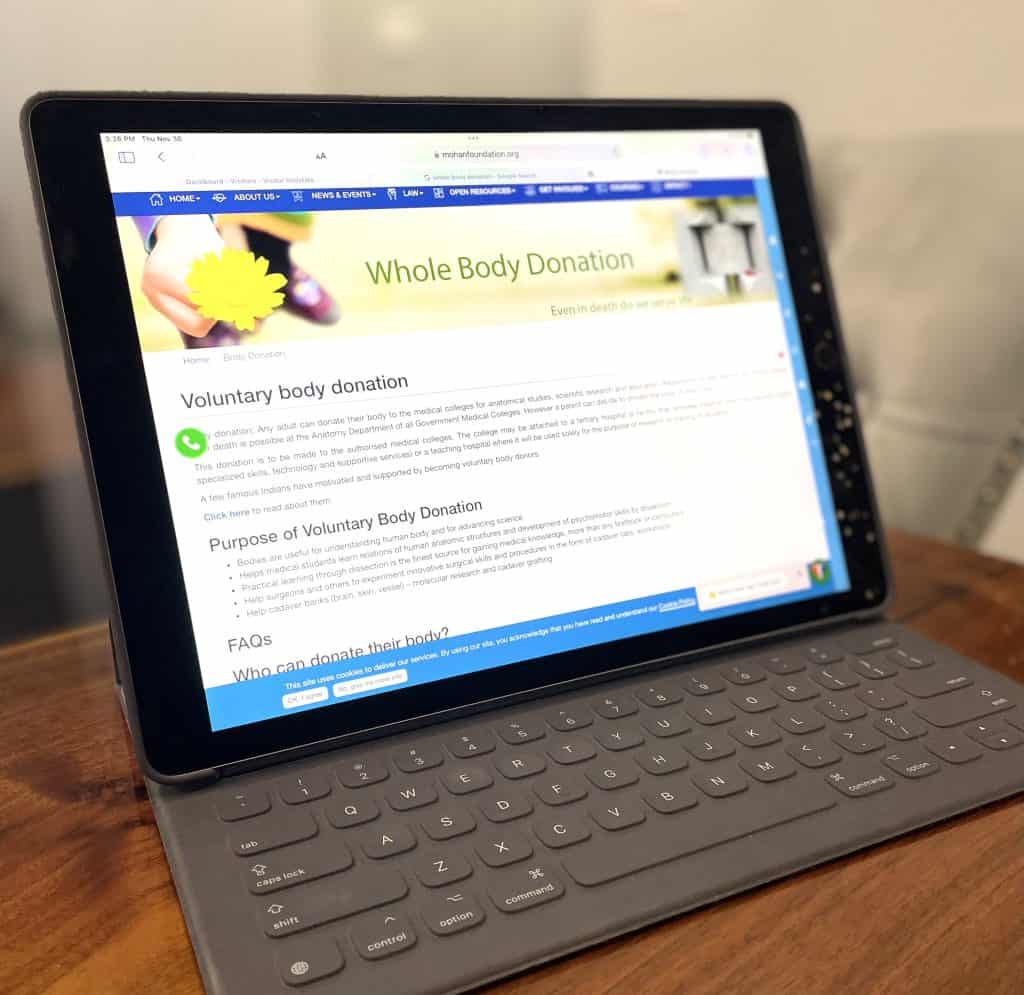
You could also consider a whole-body donation in North Carolina, where the Experience Anatomy Foundation, based in Charlotte, offers a free cremation to those who donate their bodies to science.
Visit our article on Body Donation and click on the link for Experience Anatomy to learn more.
What laws must you know to conduct a cremation in North Carolina?

Because cremation is a final disposition, strict laws govern authorization and the cremation process. The legal next of kin must sign the authorization to cremate the body before the coroner can issue a cremation permit.
If there are multiple next of kin, such as siblings, ALL must agree to and sign the cremation authorization.
If preplanning a cremation, an individual can pre-sign the required authorization forms, making things much easier for surviving families when the time comes.
A mandatory 24-hour waiting period must elapse after death before cremation can be performed. However, it usually takes a few days to get all the paperwork for a cremation.
What are the requirements and process for conducting a direct cremation in NC?
Conducting a direct cremation is straightforward in North Carolina. Here’s how it typically works:
1. Transportation of the deceased: Once the person passes away, their body is transported from the place of death to the crematory by a licensed funeral director.
2. Documentation and authorization: The funeral director will obtain the necessary documentation and authorization from the family or their legal representative, including a death certificate and any required permits.
3. Preparation for cremation: The body is prepared for cremation by removing any medical devices or non-combustible materials. The deceased may be placed in a simple container, such as a cardboard casket or an alternative container, suitable for the cremation process.
4. Identification and labeling: The deceased is identified and labeled with a unique identification number to ensure proper tracking throughout the cremation process.
5. Cremation process: The deceased (in the alternative container) is placed in a cremation chamber, also known as a retort, which is heated to a high temperature (typically around 1,600 to 2,000 degrees Fahrenheit) using flames, gases, or a combination of both. This process reduces the body to bone fragments, that are known as cremated remains or ashes.
6. Cremation Ashes retrieval: After the cremation process is completed and the remains have cooled, the ashes are carefully collected from the chamber. Any metal or other non-combustible items, such as surgical implants or jewelry, are removed from the ashes.
7. Ashes processing and packaging: The ashes are processed to ensure that they are finely ground and free of any remaining fragments. The processed ashes are then placed in a temporary container or an urn, as chosen by the family or provided by the funeral home.
8. Return of ashes to the family: The funeral director returns the ashes to the family or arranges for their collection. The family can then decide how they wish to handle the ashes, whether it’s keeping them at home, scattering them in a meaningful location, or interring them in a cemetery.
The specific process may vary slightly depending on the funeral home or crematory you choose in North Carolina. Although NC funeral legislation governs strict standards, all licensed crematories in the State maintain rigorous standards.
How long does cremation take in North Carolina?
As mentioned above, it will likely take 3-7 days before a cremation can proceed. It may take longer if authorizations are delayed or if the death certificate and cremation permit are not obtained.
The cremation process typically takes 3-5 hours. However, this varies based on the cremation retort machinery, the deceased’s weight, and the time of day the cremation is conducted.
Is Water Cremation or Aquamation available in North Carolina?

Yes, water cremation is legal and available. It is slightly more expensive than flame cremation but is much greener, with a significantly lower carbon footprint.
To learn about Water Cremation and its benefits – visit our Guide to Aquamation or Water Cremation.
There are three Aquamation Service Providers in NC, located in Hillsborough, Shelby, and Wilmington. The price for a water cremation service ranges from $1,995 to $2,500.
Where can I legally scatter cremation ashes?

The scattering of cremated remains is still somewhat unregulated. Cemeteries may offer scattering gardens, but they will charge you for the service. If you wish to scatter your loved one’s ashes somewhere scenic, public, and special, you must follow certain dispersal guidelines and check any public land permit rules.
Visit our Complete Guide to Scattering Cremated Remains for tips on how to scatter, rules and regulations on where you can scatter safely, and ideas about creative ash scattering memorial tributes.
For further reading about Cremation Services, we have a Complete Guide to Cremation and a section with Resources for Arranging a Cremation.
For further reading about arranging a funeral or cremation, visit our Funeral Costs & Options in North Carolina: 2026 Guide.
Frequently Asked Questions About Cremation in North Carolina
Is aquamation (water cremation) available in North Carolina?
Yes, alkaline hydrolysis (also known as aquamation or water cremation) is legal in North Carolina. There are currently three providers operating in Wilmington, Shelby, and Hillsborough. The cost typically ranges from $1,295 to $3,500, making it slightly more expensive than flame cremation but significantly more environmentally friendly, with a much lower carbon footprint.
Is there a waiting period before cremation in North Carolina?
Yes. North Carolina law (G.S. 90-210.129) does not allow a cremation within 24 hours of the time of death, unless the death was caused by certain infectious diseases. In practice, it typically takes 48–72 hours to process all required paperwork (including the cremation authorization form and death certificate), and most cremations occur within 5–7 days of death. If all next of kin at the same level must sign, this can sometimes cause additional delays.
What financial help is available for cremation costs in North Carolina?
North Carolina has no state-run funeral assistance program, but some counties provide limited support for indigent residents and those on welfare or low income. The Social Security lump-sum death benefit of $255 is available to eligible surviving spouses. Veterans may qualify for VA burial benefits worth up to $2,000. For the most affordable private option, direct cremation through DFS Memorials starts at just $1,196 in North Carolina.
For a complete guide to funeral costs, laws, and all options in North Carolina — including green burial and aquamation — visit our comprehensive Funeral Costs & Options in North Carolina: 2026 Guide.
Part of our Complete Guide to Cremation
This North Carolina guide is one of our state-by-state cremation resources. Explore more:
- The Complete Guide to Cremation — how cremation works, costs, options & your rights
- Average Cost of Cremation — national & state-by-state pricing
- Compare Cremation Providers — top U.S. cremation brands & prices
- Cremation Laws Explained — the rules that govern the process
- Nearby states: Virginia, South Carolina, Tennessee


